
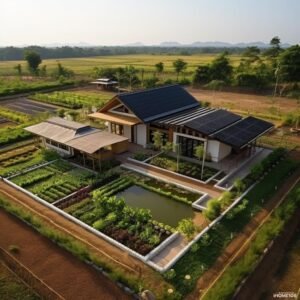
This one-acre plan for sustainable living targets full self-sufficiency by integrating food growing (perennial and annual crops), renewable energy, water conservation, waste recycling, and efficient living. The goal is to meet FIRE individuals’ needs for secure, low-cost, environmentally responsible living, supporting financial independence and early retirement while living in harmony with nature.
1. Land Zoning & Layout
-
House and Living Area: Compact, energy-efficient home with passive solar design.
-
Food Production Zone: Mixed orchard, vegetable garden, and poultry area.
-
Water System: Rainwater harvesting and greywater recycling.
-
Energy System: Solar panels, wind turbine (optional), and battery storage.
-
Composting and Waste Management: Compost bins and recycling area.
-
Recreation and Living Green Space: Natural shaded resting spots, native plants.
2. Food Production
-
Perennial Food Forest (30-40% of the land)
-
Mixed fruit trees (apples, pears, citrus, nuts, etc.)
-
Berry bushes and native edible plants.
-
Nutrient-fixing plants like legumes to improve soil.
-
-
Vegetable Garden (20-25%)
-
Seasonal and year-round veggies using raised beds or no-dig gardening.
-
Companion planting for pest control and soil health.
-
-
Greenhouse (5-7%)
-
Controlled environment for tropical plants and extended growing seasons.
-
-
Small Livestock (5-7%)
-
Cow for Milk and related products
-
3. Water Management
- Water Sources: Borewell, Well
-
Rainwater Harvesting
-
Roof catchment systems with gutters directing water to storage tanks (minimum capacity 10,000 liters).
-
-
Greywater Recycling
-
Greywater from sinks and showers used to irrigate non-edible plants.
-
-
Swales and Ponds
-
Landscape contouring to capture and slow runoff, increasing soil moisture and reducing erosion.
-
-
Drip Irrigation and Mulching
-
Efficient watering methods reducing water waste.
-
4. Energy System
-
Solar Power
-
5-10 kW photovoltaic solar system with battery storage (e.g., lithium-ion batteries).
-
Solar water heater for hot water needs.
-
-
Wind Turbine (Optional)
-
Small wind turbine if wind resources are adequate.
-
-
Energy Efficiency
-
Insulated, passive solar home design.
-
LED lighting and energy-efficient appliances.
-
-
Backup System
-
Biogas generator or propane for emergency backup.
-
5. Waste Management & Soil Fertility
-
Composting
-
Food scraps, garden waste, and animal manure composted for soil enrichment.
-
-
Vermiculture (Worm Farms)
-
Coastal addition to composting creating nutrient-rich castings.
-
-
Mulching and Sheet Mulching
-
Soil moisture retention and weed prevention.
-
6. Shelter and Infrastructure
-
Tiny or Small Home
-
Build with sustainable materials like reclaimed wood or natural plaster.
-
Green roof or living roof for insulation and habitat.
-
-
Workshop and Storage
-
Space for tools, gardening equipment, and food storage.
-
-
Paths and Access
-
Mulched or gravel walkways minimizing soil compaction and erosion.
-
7. Biodiversity and Pollinators
-
Native Plant Buffer Zones
-
Encourage local wildlife, birds, and beneficial insects.
-
-
Pollinator Gardens
-
Plant flowering herbs and flowers to support bees, butterflies.
-
8. Community and Education (Optional Extension)
-
Seed Sharing/Exchange Area
-
Preserve and exchange heirloom and open-pollinated seeds.
-
-
Skills Sharing
-
Space for workshops on sustainable living, gardening, renewable energy.
-
 Google